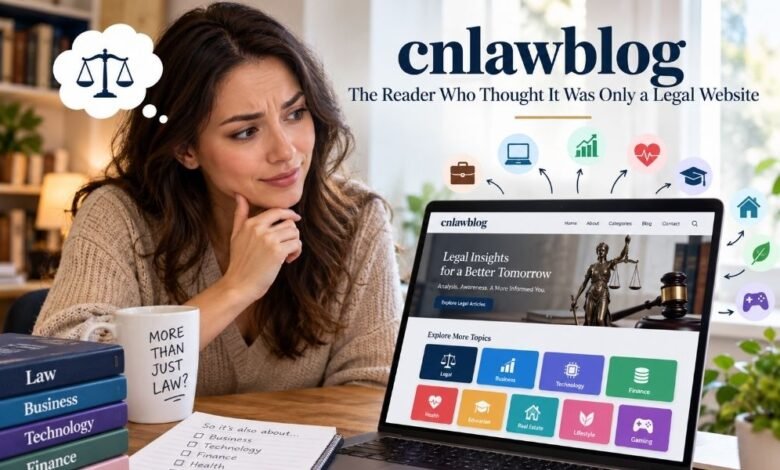
A reader opens Google with one small worry. Maybe they want to know about a legal issue. Maybe they want a simple answer about rights, rules, money, or a business problem. They type cnlawblog because the name sounds like a law blog. The word “law” is right there in the name. So the reader expects one clear thing. They expect a site that only talks about legal topics.
But when the page opens, the picture becomes wider. The site is not only about law. It also talks about business, finance, technology, education, health, real estate, lifestyle, gaming, and other helpful topics. The site’s own About page says CNLawBlog is an independent digital publication that started in August 2018 and now covers many subject areas, not law only.
A Simple Search With a Bigger Answer
This is where the story becomes interesting. The reader did not plan to study a full website. They only wanted one simple answer. But the name cnlawblog made them think in one direction. It sounded like a legal site. It sounded like a place for law guides, law news, or legal advice. That first feeling is normal. Many people judge a website by its name before they read the About page.
A name can shape trust. A name can also shape doubt. If the name says “law,” a reader may think the site is a law firm, a court source, or a legal database. But that may not be true. The linked review says the current CNLawBlog.com site does not present itself as a law firm, court, government agency, or official legal database.
Why the Name Can Mislead New Readers
Website names are powerful. They create a quick idea in the mind. When a person sees cnlawblog, they may break the word into parts. “CN” may make them think of China. “Law” makes them think of legal rules. “Blog” makes them think of articles. So the full name may sound like a blog about Chinese law. But the current site has a much wider shape.
The CNLawBlog About page says it covers law, technology, business, finance, education, health, home improvement, real estate, lifestyle, gaming, consumer information, and general guides. That means the name may not tell the full story. A new reader can feel confused because the site’s name feels narrow, while the site’s real topic range is broad.
The Reader Who Expected Only Law
Think about a small business owner. He has a question about a contract, a loan, or a work issue. He finds cnlawblog and thinks he has found a legal-only website. At first, this feels helpful. He hopes the answer will be direct. But then he sees articles about finance, tech, health, or lifestyle. Now he pauses. He may ask, “Is this really a legal website?”
That pause is important. It is not always a bad sign. It simply means the reader needs to understand what kind of website they are using. A multi-topic website can still help readers. But readers should know its limits. General articles can explain ideas. They should not replace a lawyer when a person needs legal help for a real case.
A Wider Website Can Still Be Useful
The surprise is that a wider website can be useful for many readers. Life problems do not come in one box. A money issue may also involve law. A business topic may also involve finance. A tech topic may also involve privacy. A home topic may also involve insurance. This is why a broad site may help a reader connect ideas.
cnlawblog can be useful when a person wants a simple start. It may help them learn basic words, common ideas, and first steps. The site says its goal is to make complex subjects clearer and easier to understand. That is a strong goal for normal readers who do not want hard words or long expert text.
The Real Problem Is Expectation
The main problem is not that cnlawblog covers many topics. The real problem is expectation. If readers expect a legal-only source, they may feel confused when they see many other categories. If they expect official legal advice, they may trust the site too much. If they expect a simple information site, then the site may make more sense.
This is why the first job of any reader is to ask, “What kind of source is this?” A blog can teach. A law firm can advise clients. A court site can show official legal records. A government site can show rules and forms. These are not the same things. A smart reader knows the difference.
How CNLawBlog Describes Its Work
CNLawBlog says it wants to offer reliable, well-researched, and easy-to-understand information. It also says articles are made with care for research, clarity, accuracy, and readability. The site says content is reviewed so it is clear, organized, and factually consistent. These points matter because readers want signs of care.
They want to know if a site tries to be clear and fair. The site’s editorial policy also says its goal is to make reliable information easy to access through clear and practical content. It says topics include law, technology, business, finance, education, health, home improvement, real estate, lifestyle, gaming, and consumer information.
Why Simple Writing Matters
Simple writing is not weak writing. It is helpful writing. Many readers are not lawyers, bankers, builders, or tech workers. They do not want to fight with hard words. They want to understand the main idea fast. A site like cnlawblog can help when it uses plain words and clear steps.
For example, a legal topic may be hard at first. But if the article explains what a rule means, why it matters, and what the reader should check next, then the reader gains confidence. The reader may not become an expert. But they can understand enough to ask better questions. That is a real benefit.
A Good First Step, Not the Final Answer
Readers should use cnlawblog as a starting point, not as the last word. This is true for many online articles. A blog can help you learn the basics. It can explain a topic in a friendly way. It can show common terms. It can point out risks. But it cannot know your full personal case.
If the topic is legal, medical, financial, or tax-related, the safe step is to speak with a qualified expert. CNLawBlog’s own About page says readers should seek advice from qualified professionals when specific guidance is needed for legal, medical, financial, or other professional matters.
Why Readers Should Check the Exact Domain
Another reason for confusion is the web itself. Many websites have similar names. A reader may search fast and click the first result. That can lead to the wrong page. With cnlawblog, readers may think of other law blogs or China-law sites. This can create mixed ideas. One page may describe one kind of site.
Another page may describe another. This is why the exact domain matters. The safest habit is simple. Check the website address. Read the About page. Read the editorial policy. Check the author or publisher details. Look for dates. See whether the article links to good sources. These small checks can stop big mistakes.
The Trust Question Behind Every Blog
Trust is not built by a name alone. It is built by clear writing, source checks, honest limits, updates, and reader care. If a site covers law, money, health, and business, it should be extra careful. These are topics where wrong advice can hurt people. A reader may make a money choice, a legal choice, or a health choice based on what they read.
So a broad site must explain things in a careful way. It should not act like a personal adviser. It should not make big claims with no proof. It should help readers learn, then guide them toward the right next step.
What a New Reader Should Do First
A new reader who lands on cnlawblog should not panic because the site covers more than law. A broad topic range is not automatically bad. But the reader should slow down and read with care. First, they should ask what question they are trying to answer. Second, they should check if the article is general information or expert advice.
Third, they should look for signs of quality, such as clear headings, dates, sources, and balanced wording. Fourth, they should compare important claims with official or expert sources. This is very important for legal, health, and money topics. A simple article can help, but serious choices need stronger proof.
Why This Story Feels Familiar
This story is bigger than one website. Many people face the same problem every day. They search for a name. They see a site. They make a fast guess. Then they feel unsure when the site does not match that first guess. This happens with blogs, tools, apps, brands, and news pages. It is part of modern search life.
The internet gives fast answers, but not every answer is equal. Readers must learn how to read the web. They must ask what the site is, who made it, what it covers, and what it cannot do. That habit protects them from confusion.
The Human Side of cnlawblog
The human side of cnlawblog is the reader who just wants a clear answer. This reader may be tired. They may be worried. They may not know legal words. They may not know where to begin. When they see a site with “law” in the name, they hope it will solve the whole problem. But the better way to see the site is as a learning door.
It may open into law, business, finance, technology, health, or other useful topics. That can be good when the reader wants simple knowledge. It can be risky only if the reader treats general content like personal advice.
What Makes This Article Angle Strong
This article angle works because it starts with a real user problem. It is not only a review of a website. It is about how people use search. It is about how names shape trust. It is about how readers feel when one simple search becomes more complex. It also gives a fair view.
cnlawblog is not presented as bad just because the name sounds legal. It is presented as a broad information site that needs to be understood in the right way. That makes the article more useful and more honest. Readers do not need drama. They need clear thinking.
Final Thoughts
cnlawblog can confuse new readers because the name sounds like a legal-only website. But the current site presents itself as a broader digital publication with many topic areas. That difference matters. A reader who expects only legal content may feel surprised. A reader who understands the site as a general information source may find it more useful. The best way to use the site is simple. Read it for learning.
Check the exact domain. Look at the About page and editorial policy. Compare important claims with trusted sources. And when a problem needs personal legal, medical, or financial help, speak with a qualified professional. In the end, cnlawblog is a reminder that online readers should never trust a name alone. They should check the source, understand the purpose, and read with care.