Understanding the Influence of Smell on Human Perception in Everyday Business Settings

Introduction
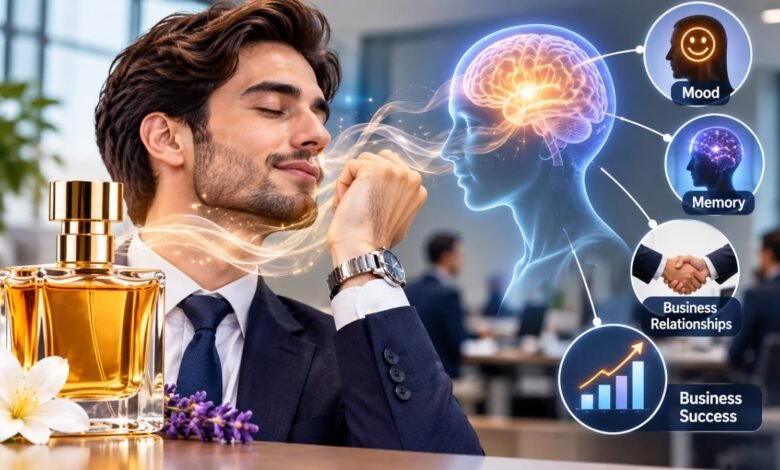
The human sense of smell plays an important role in how people experience and interpret their surroundings. Although sight and hearing often receive greater attention in the design of commercial environments, the sense of smell can significantly influence emotions, memories, comfort, and environmental perception. From retail stores and shopping centres to offices, hotels, restaurants, and healthcare facilities, ambient smells contribute to the overall impression people develop about a particular space. A pleasant and balanced indoor environment can make visitors feel comfortable, while unpleasant or overpowering odours may create negative associations.
The scientific study of smell involves several interconnected processes within the human nervous system. When people encounter airborne chemical compounds, specialised sensory receptors in the nose detect these substances and transmit information to the brain. This information is processed alongside emotional and memory-related signals, helping individuals recognise familiar smells and develop responses to different environments. Understanding these processes allows businesses to make more informed decisions about indoor environmental design, air quality, and fragrance management.
In modern commercial settings, fragrance is increasingly considered part of the overall customer experience. However, its effective use requires more than simply introducing pleasant scents into a room. Factors such as fragrance intensity, ventilation, individual sensitivity, cultural preferences, and environmental conditions must also be considered. Exploring the relationship between smell and human perception helps explain why olfactory experiences deserve attention in the planning of functional and welcoming business environments.
The Science Behind the Human Sense of Smell
The human olfactory system is responsible for detecting and identifying airborne chemical substances. When a person inhales, volatile molecules enter the nasal cavity and interact with specialised olfactory receptor neurons located in the olfactory epithelium. These neurons contain receptors that recognise different molecular features and convert chemical information into electrical signals.
The signals travel through the olfactory nerve to the olfactory bulb, a structure located near the front of the brain. From there, information is transmitted to several brain regions involved in identifying smells, processing emotions, and forming memories. Important areas include the piriform cortex, amygdala, and hippocampal regions.
Unlike many other sensory systems, olfactory processing has particularly direct connections with brain structures associated with emotion and memory. This helps explain why certain smells can trigger vivid recollections of childhood experiences, familiar places, or significant events. For example, the smell of freshly prepared food may remind someone of a family gathering, while the scent of flowers may create associations with gardens or outdoor environments.
Smell perception is also highly individual. Genetic differences, age, previous experiences, health conditions, and cultural backgrounds can influence how people identify and respond to particular fragrances. Consequently, a scent that seems pleasant to one visitor may be unfamiliar or uncomfortable to another.
How Smell Influences Human Emotions and Behaviour
Smell can influence emotional responses because olfactory information is closely connected with brain networks involved in evaluating experiences. Certain fragrances may be associated with relaxation, freshness, energy, or familiarity, depending on the individual’s previous exposure and personal associations.
For example, citrus fragrances are commonly associated with freshness and cleanliness, while lavender is frequently used in relaxation-oriented environments. However, these associations should not be interpreted as universal psychological effects. Scientific research indicates that responses to fragrances depend on factors such as concentration, context, familiarity, and individual preference.
In business environments, these emotional associations can contribute to the way visitors perceive a space. A clean, well-ventilated retail store with a subtle fragrance may feel more welcoming than an environment containing stale air or unpleasant odours. Similarly, a comfortable office atmosphere can support a more positive workplace experience.
The relationship between smell and behaviour is also studied within consumer psychology. Researchers have investigated whether ambient fragrances influence customers’ time spent in stores, product evaluations, mood, and purchasing intentions. Some studies have reported positive effects, particularly when the fragrance is appropriate for the environment. Nevertheless, fragrance alone cannot guarantee increased sales or customer loyalty. Product quality, service, pricing, store layout, and other environmental factors remain important influences.
The Relationship Between Smell and Human Memory
One of the most fascinating characteristics of the human olfactory system is its relationship with memory formation. Smells can activate memories that may have remained unnoticed for years. This phenomenon is sometimes referred to as the Proust phenomenon, named after the French writer Marcel Proust, who described how the taste and smell of a madeleine cake triggered detailed childhood memories.
Scientific explanations for this phenomenon focus on the connections between olfactory processing, the amygdala, and the hippocampus. The amygdala plays a significant role in emotional processing, while the hippocampus is important for learning and memory. Because olfactory information interacts closely with these regions, certain smells can evoke emotional memories more immediately than some other sensory experiences.
This connection is particularly relevant to commercial environments where businesses aim to establish recognisable and consistent surroundings. A distinctive but subtle fragrance may become associated with a particular store, hotel, or service location through repeated exposure. Over time, visitors may begin to recognise that environmental characteristic when returning to the same establishment.
However, memorable fragrance experiences depend on consistency and appropriateness. An excessively strong or frequently changing scent may produce irritation rather than positive recognition. Businesses should therefore focus on maintaining a balanced environment instead of using fragrance intensity as a way to attract attention.
The Role of Ambient Fragrance in Commercial Environments
Ambient fragrance refers to the introduction or presence of particular smells within an indoor environment. These smells may originate from natural materials, cleaning products, food preparation, building materials, or intentionally distributed fragrances. In commercial spaces, managing these sources is important because they influence how visitors perceive cleanliness, comfort, and the general quality of the surroundings.
Different business environments have different olfactory requirements. Retail stores may focus on maintaining a fresh and pleasant atmosphere, while offices generally benefit from neutral indoor conditions that minimise distractions. Restaurants must manage cooking odours without eliminating the natural aromas associated with food. Healthcare facilities require particular attention to ventilation, hygiene, and fragrance sensitivities.
Modern fragrance technology provides businesses with different ways to manage ambient scent distribution. A Commercial Scent Diffuser can distribute selected fragrances through controlled dispensing or diffusion mechanisms. Depending on the equipment, these systems may use cold-air diffusion, ultrasonic technology, or other methods to disperse fragrance materials into designated areas.
The choice of technology depends on several practical considerations, including room dimensions, ventilation, occupancy, fragrance formulation, and operating schedules. For example, a large reception area may require a different distribution approach from a small office or private meeting room. Appropriate placement and intensity settings are essential for maintaining a consistent environment without creating excessive fragrance concentrations.
How Environmental Conditions Influence Smell Perception
Smell perception does not occur independently of the surrounding environment. Temperature, humidity, airflow, room size, and ventilation can influence how airborne fragrance compounds move through indoor spaces and how people experience them.
Temperature can affect the evaporation rate of volatile substances. In many cases, increased temperatures encourage certain fragrance compounds to evaporate more rapidly, potentially changing their perceived intensity. Humidity and airflow can also influence the movement and distribution of airborne compounds.
Ventilation is particularly important in commercial buildings because it helps remove indoor pollutants, dilute unwanted odours, and maintain acceptable indoor air quality. Without appropriate ventilation, unwanted substances may accumulate and contribute to discomfort. Introducing fragrance without addressing the underlying source of an unpleasant odour is therefore not an effective environmental management strategy.
Businesses should distinguish between odour removal and fragrance distribution. Air filtration, cleaning, moisture control, waste management, and adequate ventilation address the sources of many unwanted smells. Fragrance systems, on the other hand, introduce additional scent characteristics into an environment. These approaches serve different purposes and should not be treated as interchangeable.
The Importance of Fragrance Selection and Concentration
Selecting an appropriate fragrance requires consideration of the purpose and characteristics of the commercial space. Fragrance families such as citrus, floral, woody, herbal, and fresh aquatic notes are commonly used in ambient scent applications. Each category offers different aromatic characteristics, but their suitability depends on the intended atmosphere and the preferences of the people using the space.
Citrus fragrances are often selected for environments where a fresh and energetic impression is desired. Woody fragrances may be used in lounges, reception areas, and retail interiors where a warm atmosphere is preferred. Herbal and botanical notes are frequently associated with wellness-oriented spaces.
Nevertheless, fragrance concentration is just as important as fragrance selection. A pleasant scent at a low concentration can become unpleasant when its intensity increases. Human olfactory systems can also adapt to continuous exposure, a process known as olfactory adaptation. This means that people may gradually become less aware of a fragrance even while other visitors continue to notice it strongly.
For this reason, businesses should avoid increasing fragrance output simply because employees can no longer detect the scent. Controlled distribution, suitable operating schedules, and regular evaluation are more effective approaches.
A properly selected Commercial Scent Diffuser should allow businesses to manage fragrance delivery according to the physical characteristics of the environment. Adjustable settings and programmable schedules can help maintain a more consistent experience while preventing unnecessary fragrance use.
Individual Differences and Fragrance Sensitivity
Although fragrance can contribute positively to some indoor environments, not everyone responds to smells in the same way. Differences in genetics, sensory sensitivity, previous experiences, and health conditions can influence individual reactions.
Some people may experience discomfort when exposed to particular fragrances. Symptoms can include headaches, nasal irritation, coughing, or respiratory discomfort. People with asthma, migraines, or fragrance sensitivities may be especially affected by certain scented environments.
This makes inclusivity an important consideration in commercial fragrance management. Businesses should avoid assuming that every customer or employee will appreciate scented surroundings. Maintaining fragrance-free areas, ensuring proper ventilation, and responding to complaints are practical ways to accommodate different needs.
Workplaces should also consider employee comfort when introducing ambient fragrances. Unlike visitors who may spend only a short time inside a commercial property, employees can experience the same indoor environment for several hours every day. Consulting staff before implementing fragrance programmes can help identify potential concerns and improve the suitability of environmental decisions.
The Role of Sensory Marketing in Modern Business
Sensory marketing is a field of marketing research that examines how sensory experiences influence consumer perceptions, attitudes, and behaviour. It considers the combined effects of sight, sound, smell, touch, and taste in shaping how individuals interact with products, services, and brands.
In commercial environments, sensory marketing can involve carefully selected lighting, background music, product textures, visual displays, and ambient fragrances. These elements help establish an environment that communicates the character and positioning of a business.
For example, a premium retail establishment may use sophisticated interior materials, carefully planned lighting, soft background music, and a subtle fragrance to communicate a particular brand identity. A supermarket may prioritise freshness, clear product displays, and appropriate management of food-related aromas.
Research in this area suggests that sensory elements can influence customer evaluations, but their effectiveness depends on how well they match the business environment. An inappropriate fragrance may create a negative impression even when the remaining interior design is attractive.
Therefore, sensory marketing should focus on creating a coherent customer experience rather than attempting to influence behaviour through individual sensory elements in isolation.
Technology and the Evolution of Fragrance Management
Advancements in fragrance technology have changed how businesses manage indoor scent distribution. Traditional air fresheners generally provide fragrance through passive evaporation or aerosol release, whereas modern diffusion equipment can offer greater control over fragrance intensity, timing, and distribution.
Some systems use cold-air diffusion, which breaks fragrance oils into fine particles without relying on conventional heating. Other technologies use ultrasonic vibrations to disperse suitable liquid formulations into the surrounding air. Each method has different operating characteristics, maintenance requirements, and suitability depending on the application.
Smart fragrance systems may also include programmable timers, adjustable output levels, and remote operating controls. These features allow facility managers to establish fragrance schedules based on business hours, occupancy patterns, and individual area requirements.
A modern Commercial Scent Diffuser can form part of a broader indoor environmental management strategy when selected and maintained appropriately. However, technology should complement essential practices such as cleaning, ventilation, humidity management, and indoor air quality monitoring rather than replace them.
Measuring the Impact of Smell in Business Settings
Understanding how fragrance affects people requires more than relying on assumptions or personal preferences. Businesses can evaluate indoor environmental experiences through customer surveys, employee feedback, observational research, and environmental assessments.
For example, retail establishments can collect feedback about the overall shopping environment, while hotels can examine guest comments relating to room freshness and comfort. Offices can assess employee opinions about indoor air quality and environmental conditions.
Businesses introducing a new fragrance programme may conduct small-scale trials before implementing it throughout an entire property. This allows managers to understand how visitors respond to different fragrance intensities and whether the selected scent is appropriate for the environment.
It is also important to distinguish between positive customer feedback and measurable commercial outcomes. A pleasant fragrance may improve environmental perception, but this does not automatically demonstrate increased revenue, productivity, or customer retention. Such outcomes require separate evaluation and reliable supporting data.
Conclusion
The influence of smell on human perception is a complex subject involving neuroscience, psychology, environmental science, and consumer behaviour. The human olfactory system is closely connected with emotional processing and memory, making smell an important component of how people interpret their surroundings. In everyday business settings, ambient odours can contribute to perceptions of freshness, comfort, cleanliness, and environmental quality.
Modern businesses can use this scientific understanding to make better decisions about indoor environmental design. Appropriate fragrance selection, controlled distribution, effective ventilation, and consideration for individual sensitivities are all essential for creating balanced commercial environments.
As fragrance technology continues to develop, businesses have more opportunities to manage their indoor sensory experiences with precision. However, the primary objective should remain human comfort rather than simply introducing stronger or more noticeable scents. By combining responsible fragrance management with good ventilation, cleanliness, and thoughtful environmental planning, commercial spaces can become more welcoming, functional, and comfortable for the people who use them.