

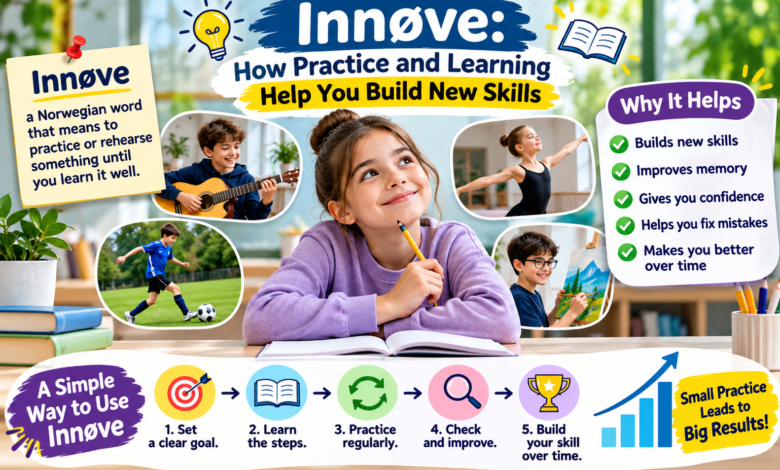
Learning a new skill can feel hard at first. You may make mistakes, forget steps, or feel like giving up. But every new skill takes time to grow. This is where innøve becomes useful. Innøve is a Norwegian word that means learning something through practice. It shows how doing the same task with care can help you get better.
You can use this idea when learning to read, write, cook, play music, or speak a new language. You do not need to master everything in one day. Small steps can lead to great results. With a clear goal and regular practice, learning becomes easier. In this guide, you will learn what innøve means, why practice matters, and how to build useful skills in daily life.
What Is Innøve?
Innøve is a word from the Norwegian language. In English, it means to practice or rehearse something until you learn it well. People often use it when talking about music, dance, acting, and other skills. For example, a person may rehearse a song many times before singing it on stage.
A dancer may practice the same steps until the moves feel smooth. Both are examples of innøve. The word is not the name of a special learning program. It describes the act of learning through practice. The main idea is simple. You learn a task, repeat it, find mistakes, and work to improve. Over time, the task can become easier to do.
Why Is Innøve Important for Learning?
Innøve matters because learning takes more than reading or watching. You must also use what you learn. Think about a child learning to ride a bike. The child may watch someone ride, but watching alone is not enough.
The child must get on the bike and try. At first, it may be hard to keep balance. With practice, the child learns how to steer, stop, and move forward. This is how many skills grow. Practice gives your mind and body time to learn new steps. It also helps you find mistakes and correct them. When you practice with a clear goal, you can make steady progress.
How Does Innøve Help You Build New Skills?
Innøve connects practice with learning. When you start something new, you often need to think about each step. After you practice, some steps may feel easier. For example, a new cook may need to read every part of a recipe. After making the same meal a few times, the cook may recall the steps without looking.
A person learning to type may start by looking at each key. With practice, typing can become faster and smoother. This does not mean repeating mistakes will help. Good practice includes checking your work and making changes. The goal is to learn the right way, not just repeat the same action.
How to Use Innøve in Everyday Life
You can use the idea of innøve in many parts of your day. Start by choosing one skill you want to learn. It might be drawing, speaking English, reading faster, or using a computer. Set a small goal that fits your time. Then work on that goal each day.
If you want to improve your English, learn five useful words and try them in sentences. If you want to draw, practice one shape before moving to a full picture. Do not rush to learn everything at once. Give each step your full care. Check your work, find what needs help, and try again. This simple plan can make learning less stressful.
The Best Ways to Practice and Learn
Start With One Clear Goal
A clear goal helps you know what to practice. Instead of saying, “I want to be good at music,” choose a smaller task. You might say, “I want to play one short song.” This gives you a goal you can see and check. When the goal is too large, it may feel hard to begin. Small goals help you focus on one task at a time. Once you complete one goal, you can choose the next. This makes learning easier to manage.
Break Large Skills Into Small Steps
Large skills often contain many smaller skills. Learning to swim, for example, may include breathing, floating, kicking, and moving your arms. It is hard to learn every part at once. A better plan is to work on one part with safe, suitable help. The same idea works for reading, writing, and computer skills. Break a task into small steps and practice each one. When you understand the first step, move forward. This helps you build a strong base for harder tasks.
Practice a Little Each Day
You do not always need long study hours. Short practice sessions can work well, too. For example, you might spend 15 minutes learning words and another 10 minutes using them. The next day, you can review what you learned. This gives you time to recall older lessons while adding new ones. Learning research shows that spreading practice across different days can help people remember information. The best amount of practice depends on the task, your age, and your goals. A short session with full focus may help more than a long session with many breaks in attention.
Check What You Remember
One useful way to learn is to test yourself without looking at the answer. After reading a short lesson, close the book and explain what you learned. Then open the book and check your answer. You may find that some parts are easy to recall while others need more work. This helps you see where to spend your time. It also gives your mind practice bringing information back. You can use this method for spelling, history, science, and language lessons. When you forget something, review it and try again.
Learn From Helpful Feedback
Feedback means finding out what you did well and what needs to change. A teacher might show a student how to solve a math problem. A music coach may help a singer stay on the right note. A friend may notice a missed step in a dance. This kind of help can make practice more useful. You can also check your own work by using a trusted guide or example. Try not to feel upset when you make a mistake. Look for the cause and choose one thing to fix. Then practice again.
Where Can You Use Innøve?
Innøve in School and Education
Students can use innøve when learning spelling, math, reading, or science. A student who finds multiplication hard can begin with a few simple sums. After learning those sums, the student can try harder ones. Reading aloud can also help children practice new words and clear speech. Teachers can support this process by giving examples and checking student work. Parents can help by making a quiet place for study and offering support. The goal is not to finish the most work. It is to understand each lesson and remember what matters.
Innøve in Music, Dance, and Sports
Music, dance, and sports all need practice. A piano player may begin with a few notes before trying a full song. A dancer may work on one step before joining it with other moves. A football player may practice passing before playing a full match. These activities need both learning and action. Practice can help improve timing, control, and skill. Rest also matters, since the body needs time to recover from hard physical activity. When practice is safe and well planned, people can build their skills over time.
Innøve at Work and Home
Adults can use innøve when learning new tasks at work or home. A person may need to learn how to use a new computer program. Another may want to cook a healthy meal or manage a home budget. At first, these tasks may seem hard. A simple guide and regular practice can make them easier. Workers can ask for help, take notes, and repeat important steps. At home, people can practice useful habits such as planning meals or keeping records. The idea works for many daily skills.
Common Mistakes People Make While Practicing
Many people think that more practice always means better results. But the way you practice matters. One common mistake is trying to learn too many things at once. This can make it hard to focus. Another mistake is repeating the same error without checking what went wrong.
Some learners also expect fast results and give up when progress feels slow. Others spend too much time reading instructions and not enough time using what they learn. A better plan is to set a small goal, practice with care, and check your progress. Take short breaks when needed. If one method does not help, try another way to learn the same skill.
How to Stay Motivated When Learning New Skills
Learning something new can feel exciting at first. After a few days, the work may feel harder. This is normal. You may not see progress every day, but small changes can still add up. One way to stay motivated is to track your practice.
Write down what you worked on and what you learned. Keep the record short and easy to read. You can also celebrate small wins, such as finishing a lesson or learning a new song. Choose goals that fit your time and energy. Learning with a friend or teacher may also help. When you feel stuck, review an easier task and build from there.
A Simple Seven-Day Innøve Practice Plan
You can try a seven-day plan to build a new skill. On day one, choose a goal and learn the basic steps. On day two, practice one small part of the task. On day three, review that part and try a new step. On day four, test what you can do without help.
On day five, find mistakes and work on fixing them. On day six, bring the steps together and try the full task. On day seven, review your progress and choose what to learn next. This is a sample plan, not a fixed rule. Some skills need much more time. The main goal is to build a steady practice habit.
What Is the Difference Between Practice and Innøve?
The English word practice has a broad meaning. It can describe almost any task done to improve a skill. Innøve has a more focused meaning in Norwegian. It often means rehearsing or learning a certain task through repeated effort. For example, a person may practice guitar each day to improve.
But learning one song for a show is a clear example of innøve. The ideas are close, but they are not always the same. Innøve often points to learning something well enough to perform or use it. This makes it a helpful word when talking about songs, speeches, dance steps, and other learned tasks.
Can Innøve Help Adults Learn New Skills?
Yes. Adults can learn new skills through practice, just as children can. They may want to learn a language, use a new tool, or develop a hobby. Adults often have busy lives, so finding time can be a challenge. A simple practice plan can help. Even a short session may be useful when it has a clear goal.
Adults can also use what they already know to understand new lessons. For example, someone who knows how to use one computer program may find parts of another program familiar. Age does not stop people from learning, though the time and help needed can differ from person to person.
Why Is Regular Practice Better Than Rushing?
Rushing can make learning feel stressful. When people try to learn too much in one session, they may forget parts of the lesson. Regular practice gives them more chances to review and improve. Imagine learning ten new words in one day.
You might remember some words at first but forget them later. If you review those words over several days, you give yourself more chances to recall them. This can help build stronger memory. The same idea can support music, math, and many other skills. Progress may feel slow, but steady work can lead to useful results.
Final Thoughts
Innøve is a Norwegian word with a simple lesson. It means learning something through practice or rehearsal. The idea reminds us that new skills take time, care, and effort. Whether you want to improve at school, learn music, play sports, or build a new work skill, practice can help.
Start with a clear goal and divide the task into small steps. Work on those steps, check your mistakes, and keep learning. You do not need to become an expert in one day. What matters is making progress and learning from each attempt. With patience and a useful plan, innøve can become a helpful idea for building skills throughout life.
