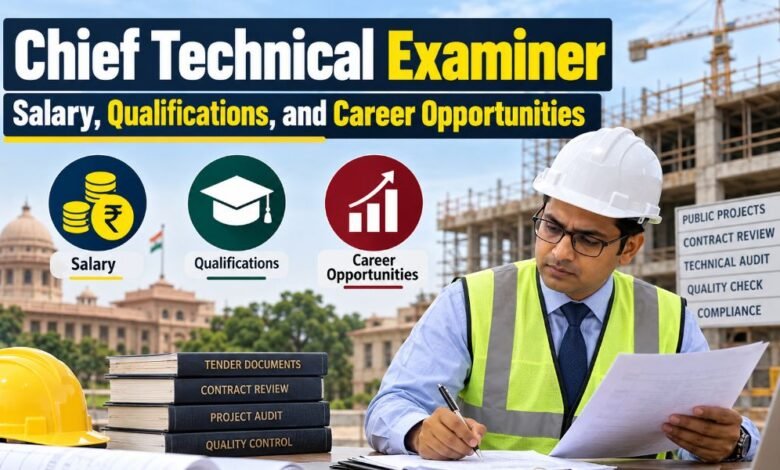
A chief technical examiner is a senior officer who checks government work. This officer helps make sure public money is used in the right way. The job includes checking roads, buildings, bridges, and other public projects. The officer also checks bills, work quality, and project records.
This is an important job because government projects cost a lot of money. A small mistake can cause a big loss. Many people want to know about the salary, education, skills, and jobs in this field. This article explains the role of a chief technical examiner in 2026 in easy words.
What Is a Chief Technical Examiner?
A chief technical examiner is a senior officer who checks technical work. In India, this role is linked to the Central Vigilance Commission (CVC). The CVC has a technical office called the Chief Technical Examiners’ Organisation (CTEO). This office checks selected government contracts and projects.
A chief technical examiner helps find mistakes in work, bills, and records. The officer also checks if the work follows the contract. The main goal is to help protect public money. This job needs good technical knowledge, years of work experience, and fair decisions.
Chief Technical Examiner Salary in 2026
The salary of a chief technical examiner depends on the government department and the pay level of the job. In India, senior government officers receive pay under official rules. Their income may include basic pay and extra allowances.
These can help with housing, travel, and living costs. The amount is not the same for every officer. It can change with the job level and place of work. The exact salary for 2026 must be checked in the latest official job notice. People who want this job should not trust salary numbers without a government source.
Education Needed for a Chief Technical Examiner
A person who wants to become a chief technical examiner needs good technical education. An engineering degree is often important for this type of work. Civil engineering helps with roads, bridges, and buildings. Electrical engineering helps with power systems and equipment.
Mechanical engineering helps with machines and other technical work. The exact degree needed depends on the job rules. A person also needs many years of work experience for a senior post. Good reading, writing, and math skills are helpful. These skills make it easier to check reports, bills, and project plans.
Main Duties of a Chief Technical Examiner
A chief technical examiner has many important duties. The officer helps check government contracts and the quality of public work. The job may include reviewing building plans, work records, bills, and test reports. The officer also checks reports made by other technical staff.
If a problem is found, the team asks for more details. For example, a contractor may charge for work that is not clear in the records. The examiner helps check the facts. The officer must be fair and careful. A mistake in a record does not always mean someone has done something wrong.
How a Chief Technical Examiner Checks Projects
A chief technical examiner helps review selected public projects. The team first reads the contract and project papers. These papers explain what work should be done and how much it should cost. The team may then visit the worksite.
It can check materials, measurements, and test results. For example, a new road may look good from the outside. But the team may need to check the records for the road materials. The chief technical examiner reviews the findings and may ask for more checks. This helps show if the work meets the agreed rules.
How Bills and Payments Are Checked
Checking bills is another part of the job. A chief technical examiner helps make sure payments are supported by work records. The team compares the bill with the contract and measurements. For example, a company may ask for payment for 100 doors. The records may show only 90 doors.
The team must check why there is a difference. There may be more doors in another part of the project. There may also be a mistake in the bill. The officer must study the records before making a finding. This helps stop wrong payments and keeps public spending clear.
Skills Needed for This Job in 2026
A chief technical examiner needs many useful skills. The officer must understand engineering work and government contracts. Good math skills help with bills, costs, and measurements. Reading skills help with long reports and project records. Writing skills help the officer explain problems in simple and clear words. Computer skills are also useful in 2026.
Many offices keep bills, plans, and other papers in digital form. Spreadsheets can help compare numbers. Online systems can help find project records. But computers cannot make every decision. The officer still needs to check the facts and use good judgment.
Career Opportunities for a Chief Technical Examiner
A career in technical checking often starts with an engineering job. A person may first work as a junior engineer or assistant engineer. After gaining experience, the person may move to a higher post. Some engineers become senior officers who manage projects or check technical work.
A chief technical examiner is a senior role, so it is not usually a first job. In India, some senior posts are filled by officers sent from other government departments for a set time. This is called deputation. Engineers can also build careers in quality checking, public works, and contract review.
How to Become a Chief Technical Examiner
Becoming a chief technical examiner takes education, time, and experience. A student can begin by studying science and math. The next step is to earn a suitable engineering degree. After that, the person can work on real projects and learn how contracts are used. It is helpful to understand building plans, work costs, and quality tests.
Over time, an engineer can gain the experience needed for senior posts. People who want to apply should read official government job notices. These notices explain who can apply and what papers are needed. Not every engineering graduate can apply for a senior CTE post.
New Technology Used in 2026
Technology can make technical checking faster and easier. A chief technical examiner may work with teams that use online records and digital reports. These tools help staff find bills, contracts, and project details. Digital photos may help show the condition of work at a site.
Computer sheets can help compare costs and measurements. Some offices also use online systems to follow project progress. These tools are useful, but they do not prove that a project is good or bad. A person must still check the real work and the records. Good technology helps officers ask better questions and find missing details.
Problems Faced by a Chief Technical Examiner
The job of a chief technical examiner is not always easy. Some projects have many papers, bills, and changes. Important records may be hard to find. A building project may also take longer than planned. The team must understand why the delay happened.
Sometimes, a bill may not match the work records. The officer must ask questions and check the answers. Site visits can also take time. Another challenge is writing clear reports that other people can understand. The examiner must not rush to blame anyone. Every finding should be based on facts and proper records.
Why a Chief Technical Examiner Is Important
A chief technical examiner helps protect public money and improve government work. Roads, schools, hospitals, and other public projects are made to help people. Poor work can waste money and create safety problems. Technical checking helps find issues that need attention.
It can also help departments keep better records and follow contract rules. A good examination may show where work needs to improve. The officer does not build every project or control every payment. The role is to help review selected work in a fair way. This makes the job important for public trust and better government projects.
Final Thoughts
A chief technical examiner has an important job in government work. The officer helps check project quality, bills, and public spending. This career needs an engineering background, many years of experience, and strong checking skills. The salary depends on official pay rules. In 2026, digital tools can help make the work easier, but careful human review is still needed. For people who enjoy engineering and want to help improve public projects, technical examination can be a good career path.
FAQs
1. What is the salary of a chief technical examiner in 2026?
The salary of a chief technical examiner depends on the government pay level and job rules. In India, the officer may receive basic pay and extra allowances. The amount can change with the post and work location. For the correct 2026 salary, people should read the latest official government notice.
2. What education is needed for this job?
An engineering degree is usually important for senior technical examination work. Civil, electrical, and mechanical engineering can be useful. The right degree depends on the post. A person also needs strong work experience. Senior jobs often have special service rules that applicants must meet.
3. Is a chief technical examiner a government officer?
Yes, in the Indian CVC system, a chief technical examiner is a senior government officer. The officer works with a technical team that checks selected public contracts and projects. Similar job names may be used in other places, but the duties and rules can be different.
4. What does a chief technical examiner check?
A chief technical examiner helps check project plans, contracts, bills, work quality, and technical reports. The team may also check materials and measurements. If a problem is found, the officer helps review the facts and the reply given by the department. The aim is to make sure the records support the work and payments.
5. How can I get a job as a chief technical examiner?
A person can start by earning a suitable engineering degree. The next step is to gain experience in technical work and government projects. Learning about contracts, costs, and quality checks is helpful. After gaining enough experience, an eligible officer can look for official senior job notices and apply under the stated rules.