Singapore is home to people from many cultural and religious backgrounds, and Buddhist funeral customs remain an important part of the country’s cultural heritage. When it comes to funerals, for Buddhist families, it’s not just about saying goodbye to a loved one. It is a chance to show respect for the person who died, to remember that nothing lasts forever, to help the person’s soul on its journey, and to help unite the family in a time of hardship.
Depending on beliefs, family traditions, and personal preference, Buddhist funeral services include prayers, chanting, offerings, memorial rituals, and a period of mourning. This Harmony Funeral Care’s Buddhist funeral service guide explains the customs, rituals, and etiquette families and visitors should know. Knowing these traditions can help families make meaningful arrangements and help visitors pay their respects appropriately.
1. The Meaning Behind Buddhist Funeral Traditions
According to Buddhism, everything is impermanent, and death is natural. For many Buddhist families, the ideas of karmic laws, reincarnation, compassion, and mindfulness play a role in their approach to death and bereavement.
Buddhist funeral ceremonies emphasize not only grief but also reflection, spiritual awareness, and positive intentions. Family can join prayers or acts of giving that are for the deceased.
These rituals vary according to the family’s Buddhist tradition and have different interpretations and meanings. Different customs may be practiced by the Theravada, Mahayana, and Vajrayana communities, and by individual families; these may be cultural practices that have been passed down from generation to generation.
It is important to understand these differences when arranging a funeral that is sensitive to the person’s beliefs.
2. Buddhist Funeral Wakes and Their Purpose
The family might have to make several decisions in a short time when someone dies. These include communicating with the appropriate authorities, organizing the required paperwork, selecting a funeral home, and selecting the location of the wake.
With this sort of funeral company that knows about Buddhist funeral services, it will definitely make arranging things easier while respecting the wishes of the family in terms of their religion.
The family should discuss the important matters such as whether there will be monks present or not, the type of chanting, the duration of the wake, and even whether the body will be cremated or buried.
Also, it’s useful to have someone in the family who could convey the decisions to family and the funeral organizer. This helps to avoid any confusion if there are multiple people involved in the planning process.
3. Funeral Wakes in Buddhism
A wake serves as a time for family, friends, colleagues, and members of the community to come together to show their support before the final funeral.
Buddhist Wakes can be held at a void deck, funeral parlour, private venue, or other appropriate venue based on availability, budget, and family preference in Singapore.
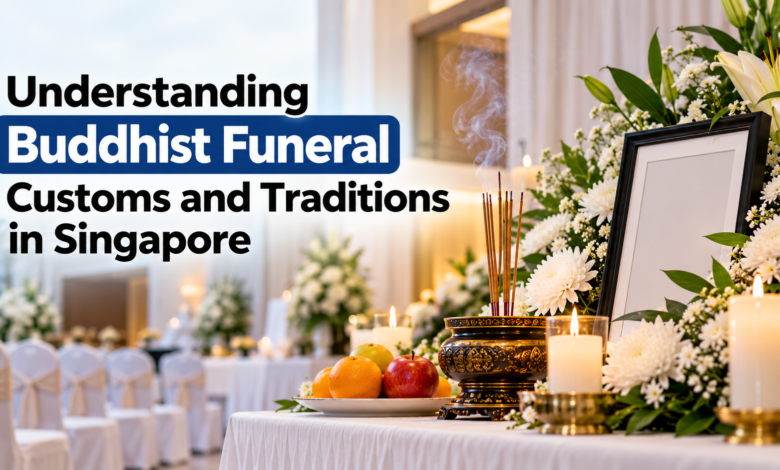
Typically, the wake features an area for the deceased, a portrait, flowers, religious images (as applicable), and a condolence area. Some families set up chairs for visitors and serve refreshments for people visiting.
There could be a quiet and reflective atmosphere, especially during times of religious chanting. There may be other wakes that have more interaction between relatives sharing memories and supporting each other.
No one size fits all when it comes to the arrangement. The most crucial factor is to make an environment that is respectful and will be able to allow people to mourn together, while also accommodating religious observances.
4. Funeral Altars, Offerings, and Flowers
They can include a portrait of the deceased, flowers, candles, incense, and other items suitable to the family’s tradition, on a Buddhist funeral altar.
Flowers may symbolize the beauty and impermanence of life. As they gradually fade away, visitors may be reminded of the Buddhist central idea of impermanence.
Offerings are sometimes made as part of families’ religious practices. These can be fruit, food, or other symbolic objects, depending on the local custom and the Buddhist tradition practiced.
Not all families access the same services, and some practices might vary significantly. It is best to abide by the wishes of the family and their religious practitioner.
5. Appropriate Behaviour When Attending a Buddhist Wake
Going to a funeral can feel rather bizarre, particularly if one is not part of the religion of the person who died. Respect is natural and often is expressed through small actions.
Attendees are meant to come in proper attire and whisper during the entire duration of the wake. Wearing dark and quiet clothes can be appropriate, although requirements for what to wear can vary depending on families.
Attendees can offer brief condolences, sign a condolence book (if there is one), or just be ready to stay quietly by the side of the grieving family members. It is unnecessary to use proper religious words while expressing compassion.
Conclusion
Knowing more about the funeral practices and rituals associated with Buddhism in Singapore would enable you to conduct an appropriate funeral ceremony for your loved one according to their beliefs. You have to select either a wake, chanting, cremation, or burial service in accordance with your family’s preferences and culture. As there can be different practices within a religion, it is crucial that you talk with your family members as well as the experts at a good funeral home and religious organizations.