Why Training Teachers is One of the Most Effective Ways to Protect Education in Conflict Zones

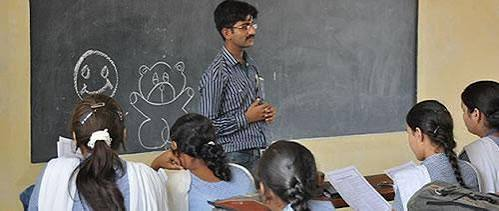
Whenever a school gets destroyed in a war, the photos are always of the building. Collapsed roof, dusty desks, maybe a chalkboard hanging from one nail. I get why. It’s an easy picture to react to. But I think the more important question is what’s left once the building is gone.
Usually, it’s the teacher.
Let’s call him Mr. Karim. He’s made up, but plenty of real teachers would recognize his week. His school closed when fighting reached the district, and now he teaches sixty kids under a tarp at the edge of a displacement camp. There are a few notebooks between them, no textbooks, and two children who haven’t said a word in weeks. Nobody trained him for that last part. He’s improvising, mostly on stubbornness.
This is the case for teacher training in conflict zones, and it’s stronger than most people realize. A prepared teacher keeps lessons going when almost nothing else is, and gives scared kids something a worksheet can’t: a steady adult in the room. The rest of this post looks at why that works and what it takes.
More than a teacher
In a calm country, a teacher mostly teaches. In a war zone, the job balloons. INEE, a global network of education responders, describes teachers in crisis settings as people working with very little support who end up covering all kinds of needs, for their students and for the wider community. Mr. Karim ends up part counselor, part referee, and often the first adult to notice when a kid is in trouble.
And he has his own troubles. He’s probably been displaced too. Teachers in conflict areas are often paid late, or not at all.
The numbers are hard to ignore
Education Cannot Wait says 234 million school-aged children in crisis-affected countries need urgent help and 85 million of them are not in school at all. And that’s how the whole field of education in emergencies developed.
On the teachers’ side, UNESCO says the world needs 44 million additional teachers by 2030, 15 million of them in sub-Saharan Africa. That’s a worldwide number, not a war zone number. But you can guess which classrooms are going to feel shortchanged first.
A scared kid can’t learn fractions
Nobody learns well when they are scared to death. Analysis by UKFIET points to evidence from crisis settings of a link between children’s wellbeing and improved concentration, attendance and learning. It also points out that most teachers enter these classrooms unprepared for conflict-related tension or trauma.
Good training closes some of that gap. It doesn’t make teachers therapists. It gives them something to do on a bad Tuesday and that is the basis of psychosocial support in schools. It’s something one person in the room can start doing right now. A solid course tends to cover:
- Running a class of mixed ages with big gaps in what kids know
- Calming routines, and what to do when a child freezes or lashes out
- Knowing when a child needs more help than a teacher can give
- Looking after their own wellbeing, which gets forgotten a lot
Why it’s money well spent
Buildings can be bombed again. A trained teacher can’t be untrained. She carries what she learned into the next tent classroom, and the one after that, and every group of kids who come through. One round of training keeps paying off for years. That’s the heart of the argument for teacher training in conflict zones, and it’s why quality education in conflict comes down to who’s standing at the front of the room.
Where War Child USA fits
War Child USA is U.S.-based nonprofit that supports children affected by war through education, child protection and community-led recovery. Most of its staff come from the communities they serve which matters more than it sounds. Local teams know the language, the risks and which families to trust.
Their work in education is wide-ranging: safe spaces to learn, catch-up classes for children who’ve lost years of schooling, teacher support, and ways to keep learning going when it’s not safe to get to a classroom. It also focuses on the emotional recovery of children, because a child who feels safe learns better.
That mix is what it takes to support children’s education in war zones: a bit of everything, built with the people who live there.
Conclusion
Back to Mr Karim for a second. Someone, in another telling of his story, has taught him how to make a silent child safe enough to speak. He has some textbooks and a colleague down the row to bounce ideas off. The two quiet kids start talking slowly. One word one day a complete sentence the next week.
Nobody’s going to write a headline about that. But it is the kind of change that outlasts ceasefire and funding cycle. A child who keeps learning grows up with options and a community with trained teachers can rebuild its schools from the inside with its own people doing the work. That kind of progress holds up.