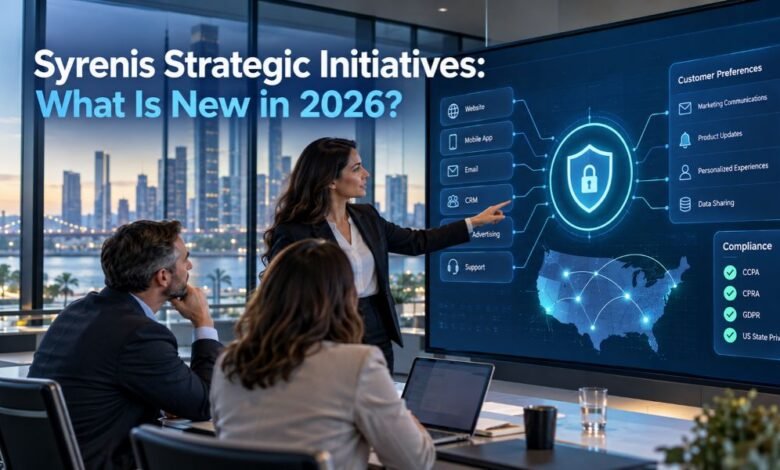
A simple privacy choice can be hard to manage. This is the problem behind syrenis strategic initiatives. Its plans cover new digital tools, strong partnerships, and US growth. In 2026, the company made a big change to its name and shared new examples of its work. Here is what those changes mean for firms and the people who use their services.
Quick Bio
| Quick Fact | Details |
|---|---|
| Company | Syrenis |
| Main field | Privacy software |
| Main goal | Manage consent and choices |
| Former platform name | Cassie |
| Current platform brand | Syrenis, since April 2026 |
| Chief executive | Adam Binks |
| UK base | Daresbury, England |
| US offices | Austin and Atlanta |
| Key users | Large, global companies |
| Reported connections | More than 350 integrations |
| 2025 alliance | The Data Privacy Group |
| 2026 focus | US growth and wider privacy tools |
What Are Syrenis Strategic Initiatives?
The term syrenis strategic initiatives means the steps Syrenis takes to grow and improve its service. It is a plan to help large firms use customer data with more care. A bank may have an app, a website, and an email team. Syrenis wants those records to match. The goal is simple: make a person’s choice easier to find and follow.
From Cassie to the Syrenis Name
Cassie was the name of the company’s consent and choice platform. But one of the most important syrenis strategic initiatives arrived on April 21, 2026. Syrenis said it was retiring old product names and bringing its tools under one Syrenis brand.
That means people may still see Cassie in older news or product reviews, while newer pages use Syrenis. It shows that the firm wants to be seen as a full privacy platform, not just a cookie banner tool. Its work now spans consent, customer choices, data links, and privacy requests across large firms.
One Clear Record for Every Customer Choice
A main part of syrenis strategic initiatives is one shared record of consent. Consent means a person says yes to a clear use of their data. A customer can also say no or take back that yes later. Think of a person who stops sale emails through an online shop.
If the email team uses an old list, it may keep sending them. Syrenis aims to send the new choice to linked systems so teams can act on it. The platform also keeps a history of changes. This can help staff check when a choice was made, what it covered, and if it was later changed. Those details may matter if a customer asks why a message was sent.
Why This Matters for Large Firms
Big firms may use many apps and tools, so syrenis strategic initiatives focus on keeping them in step. A website, a shop app, a help desk, and a customer list may all need the same privacy facts. When records do not match, people may get messages they did not want.
A shared record can lower that risk and save staff from checking each tool by hand. Yet software cannot decide all the rules for a company. Teams still need good data safety plans, trained staff, and clear notices that tell people how their information is used. A good system supports those duties but cannot replace them.
Cross-Domain Consent Makes Visits Easier
Another part of syrenis strategic initiatives is cross-domain consent. A domain is a website address. Some firms own many sites or brands. Without a shared system, a person might face the same cookie question on each site.
Syrenis offers a way for approved, linked sites to know a choice already made. That may mean fewer pop-ups and a smoother visit. But the sites must be set up with care. Sharing a choice does not mean one yes covers every new purpose. The user must still get clear facts and control. A shared choice should be easy to review, and a person should be able to change it.
Connecting More Than 350 Business Tools
Syrenis says its platform supports more than 350 integrations. This is a key part of syrenis strategic initiatives because a privacy choice is only helpful if the right systems receive it. An integration is a link between two tools.
It can help a customer choice move from a preference page to an email service or customer database. Still, the number is a company claim, not a promise that every tool will work at once. Each link needs testing and care. A firm should check how fast updates move and what happens if one of its tools stops working.
Growing in the United States
US growth is a major part of syrenis strategic initiatives in 2026. Led by CEO Adam Binks since 2025, the company said it had opened a US sales operation in Atlanta. Its site also lists offices in Austin, Texas, and Atlanta, Georgia. This matters because US firms face privacy rules that may change from one state to the next.
A large brand may serve people in many states through one app. It must know which data rules apply and where customer choices must be used. But a bigger US office does not, by itself, prove faster sales or higher revenue. The real test is whether clients can use the service well at scale.
New Partners Help Turn Plans into Work
Syrenis strategic initiatives also include help from expert partners. In August 2025, Syrenis announced an alliance with The Data Privacy Group. The idea was to match Syrenis software with hands-on privacy advice. Syrenis also announced a tie with Myna Partners, a US privacy advice firm.
Such partners can help a company work out which choices it needs to collect and how to set up its systems. Staff must know who owns each task, how records move, and how mistakes will be fixed. Good advice and good software work best together. Clear steps for staff are just as important as a well made tool.
What About KPMG?
Some syrenis strategic initiatives involve talks with firms that help others set up business tools. Syrenis has a page made for KPMG after a workshop and product demo. It offers guides and ideas for working together.
This is useful proof of contact, but it does not show that all KPMG offices have signed a wide business deal with Syrenis. When writing about company growth, it is better to name what is known than to guess. The KPMG page shows interest in joint work and sharing skills. It should not be used as proof of sales, contracts, or a global alliance.
Better Choice Pages and First-Party Data
Syrenis strategic initiatives also aim to make choice pages easier for people to use. A preference center lets a person pick what kinds of news they want and how they wish to get it. They might want order updates by email but not sales texts.
The company also offers progressive profiling. That means asking for small bits of information over time, not a long form at once. These tools can help a firm build first-party data, which comes from its own users. People must still be free to change their minds. A useful page should make that change easy to find and save.
What Did Syrenis Share in 2026?
Two July 2026 case studies give real examples of syrenis strategic initiatives at work. In one, Syrenis said it helped a life sciences firm with work in more than 100 countries launch a service for direct buyers.
The setup used rules based on place, linked websites, and a way to match users. Another case study described an automaker that needed consent records for data from many cars and drivers. One person could own two cars yet allow different data uses in each. These are company-published accounts, not outside tests.
Privacy Requests, AI, and the Next Step
The future of syrenis strategic initiatives may stretch past consent forms. In May 2026, the company published details of a Privacy Rights Portal. The tool is meant to help teams handle requests from people who want to use their data rights.
It can help staff track a case and keep a record of the steps taken. Consent records may also aid AI checks by showing what data use a person accepted. But they cannot make an AI system safe on their own. Firms still need people to review risk, protect records, and follow the law. A record of consent cannot tell a company whether an AI answer is fair or correct.
Final Thoughts
Syrenis strategic initiatives show how a simple idea can grow into a large task: listen to a person’s data choice and keep it clear across every tool. The 2026 brand change, US growth, partners, and new case studies show where the company is placing its effort. Its results will depend on how well firms use the tools, check their links, and honor the choices people make. Good privacy starts with that basic promise.
FAQs
1. What is the main goal of syrenis strategic initiatives?
The main goal is to help large firms manage privacy choices in one clear way. Syrenis wants a choice made on a site, app, or help page to reach the teams that need it. That can reduce mixed records and unwanted messages. The strategy also covers US growth, new product tools, and expert partners. It is about both better software and a bigger business.
2. Is Cassie still the name of the platform?
Cassie is the old platform name. On April 21, 2026, Syrenis said it was moving away from old product brands. It now uses Syrenis as the main brand for its wider platform. Old articles may still say Cassie, and that does not mean they refer to a separate company. When reading a review, check its date to see which name was in use.
3. How do syrenis strategic initiatives help customers?
They can give people more control over their data. A person may choose the kind of messages they want, then change that choice later. If systems are linked well, the new choice can reach the right teams. This may lead to fewer repeat cookie questions and fewer unwanted emails. How well it works depends on each firm’s setup, rules, and checks.
4. Does Syrenis make a company follow every privacy law?
No. A software platform can help collect, store, and share consent. It can also keep useful records for checks. But each business must learn which laws apply to it. That may depend on the place, type of data, and reason for use. Legal advice, data safety, and staff training are still needed. No single tool makes every use of data lawful.
5. What is new about syrenis strategic initiatives in 2026?
The biggest public changes include one Syrenis brand, a stronger US push, and wider privacy tools. The company also shared examples of work with a global life sciences firm and a car maker. Its Privacy Rights Portal adds help for data rights requests. These updates point to a larger plan: one platform for many parts of privacy work, not only website banners.