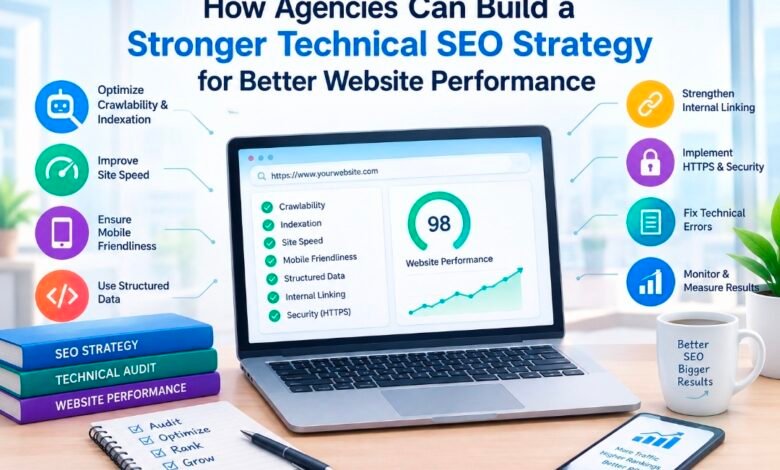
How Agencies Can Build a Stronger Technical SEO Strategy for Better Website Performance

Introduction
A website can have high-quality content and valuable services, but technical problems can prevent search engines from discovering, crawling, and indexing its pages effectively. A strong Technical SEO Strategy helps agencies identify these problems, improve website performance, and create a better experience for users.
Technical SEO involves optimizing a website’s underlying structure, loading speed, mobile usability, internal links, and indexing signals. However, identifying issues through an audit is only the first step. Agencies must also prioritize recommendations, coordinate with developers, implement appropriate fixes, and monitor the results to achieve lasting improvements.
For businesses competing in crowded digital markets, technical SEO provides a foundation for sustainable organic growth. MeetisMeet offers SEO, website development, and digital marketing services to help businesses strengthen their websites and improve their online presence.
Common Technical SEO Issues That Affect Website Performance
Before implementing improvements, agencies need to understand which technical problems may prevent a website from performing effectively in search results.
Crawlability and Indexability Errors
Search engines use automated crawlers to discover and process website pages. Crawlability issues can prevent these crawlers from accessing important content, while indexability issues can stop eligible pages from appearing in search results.
Common causes include incorrect robots.txt directives, accidental noindex tags, inaccessible pages, and weak internal linking. Agencies should check whether important landing pages, service pages, and blog posts are accessible to search engines.
Broken Links and Redirect Chains
Broken internal links lead users and search engine crawlers to pages that no longer exist or return errors. Redirect chains occur when a URL redirects through multiple intermediate URLs before reaching its final destination.
Both problems can create unnecessary navigation steps and complicate crawling. Agencies should repair broken links, update outdated destinations, and simplify redirects wherever possible.
Duplicate Content and Canonical Tag Issues
Duplicate or substantially similar pages can make it difficult for search engines to determine which URL should represent the content in search results.
Canonical tags help indicate the preferred URL among duplicate or similar pages. However, incorrect canonical references can cause important pages to be overlooked. Agencies should review canonical tags, URL variations, pagination, and internal links to maintain consistent signals.
Slow Page Speed and Core Web Vitals
Slow-loading websites can frustrate visitors and negatively affect engagement. Large images, render-blocking resources, excessive JavaScript, and inefficient server responses are common causes of performance problems.
Google’s Core Web Vitals measure important aspects of user experience:
- Largest Contentful Paint (LCP): Measures loading performance. A good result is 2.5 seconds or less.
- Interaction to Next Paint (INP): Measures responsiveness. A good result is 200 milliseconds or less.
- Cumulative Layout Shift (CLS): Measures visual stability. A good result is 0.1 or less.
These thresholds should generally be met at the 75th percentile of page visits. Agencies can use PageSpeed Insights and Google Search Console to identify pages that need improvement.
XML Sitemap and robots.txt Configuration Errors
An XML sitemap helps search engines discover important URLs, while robots.txt provides instructions about which areas crawlers can access.
Problems arise when sitemaps include redirected, broken, or noncanonical URLs, or when robots.txt unintentionally blocks important resources. Agencies should ensure that sitemaps contain the intended canonical URLs and that crawling directives match the website’s SEO requirements.
How Technical SEO Impacts User Experience and Search Visibility
Technical SEO supports search visibility by helping search engines access website content and by improving the experience visitors receive after arriving on a page.
Improve Website Crawling and Indexing
Search engines need to discover and process important pages before those pages can appear in organic search results. Clear internal linking, accurate sitemaps, and correct indexing directives help search engines understand a website’s structure.
Agencies should verify that important pages are internally linked, return the correct HTTP status codes, and are not accidentally blocked from indexing.
Enhance Page Loading Speed and Mobile Usability
Visitors expect websites to load quickly and respond smoothly across devices. Slow pages and difficult mobile navigation can cause frustration, particularly for users accessing a website through a mobile connection.
Website Performance Optimization may include compressing images, using modern image formats, reducing unnecessary scripts, enabling appropriate caching, and improving server response times. Agencies should also test page layouts, buttons, menus, and forms on mobile devices.
Create a Better Website Navigation Experience
A logical website structure helps visitors find information without unnecessary effort. It also helps search engines understand relationships between pages.
Agencies should organize content into meaningful categories, maintain descriptive internal links, and make important service pages accessible from relevant navigation elements. Breadcrumb navigation can further clarify where a page sits within the website hierarchy.
Support Organic Search Performance and Conversions
Technical SEO does not guarantee higher rankings or conversions. However, resolving technical barriers can help search engines access relevant content and allow users to interact with a website more easily.
For example, a business website with accessible service pages, fast-loading forms, and clear navigation may provide a smoother path from an organic search visit to an inquiry. Agencies should evaluate technical improvements alongside relevant engagement and conversion metrics.
Conclusion:
A stronger Technical SEO Strategy requires more than identifying website errors. Agencies need to understand which problems matter most, prioritize fixes, collaborate with developers, validate changes, and monitor performance over time.
By improving crawlability and indexability, resolving redirect and canonical issues, optimizing Core Web Vitals, and maintaining accurate sitemaps, agencies can create a stronger technical foundation for organic search visibility and user experience.
For businesses seeking support with these improvements, MeetisMeet provides SEO, website development, and digital marketing services designed to help strengthen online presence and support long-term digital growth. Combining technical expertise with continuous monitoring helps businesses maintain healthier websites and build a more sustainable search strategy.